Key Takeaways
- Palm Jumeirah has transitioned from a speculative growth zone to a blue-chip liquidity haven.
- Inventory scarcity on the Fronds continues to drive a disconnect between price and traditional yield metrics.
- Secondary market velocity remains high, outperforming most emerging Dubai districts in exit speed.
- Capital preservation is the primary driver for UHNW investors entering at current price floors.
The Macro Thesis: Scarcity as a Sovereign Asset
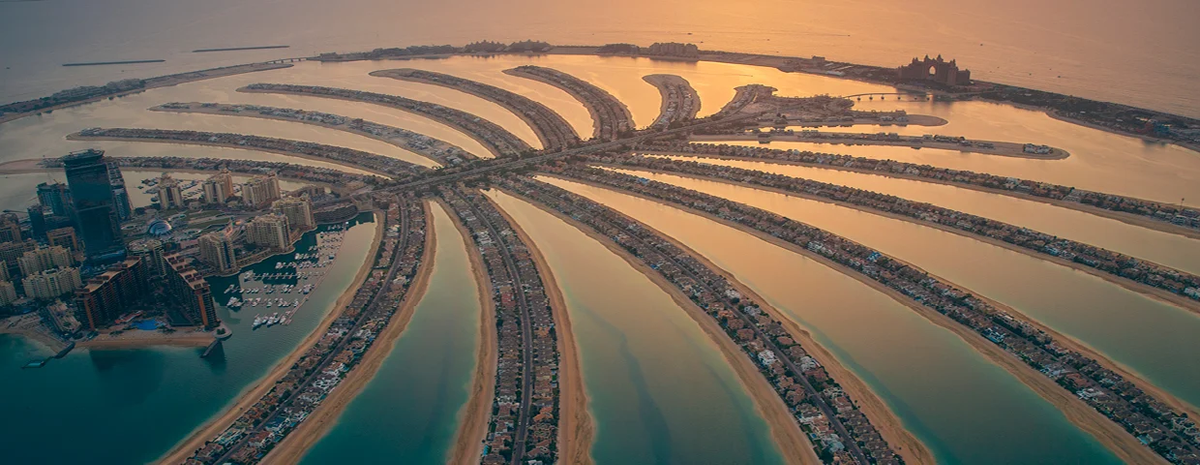
Palm Jumeirah is no longer a growth play for the retail speculator. Our data indicates it has reached institutional maturity. It functions as a global liquidity destination. In a volatile global economy, ultra-high-net-worth individuals treat this island as a USD-pegged vault. The macro thesis is simple: supply is finite. No more fronds can be added. While other areas of Dubai expand into the desert, the Palm remains a closed ecosystem. This geographical constraint creates a permanent price floor. We view it as the only district in Dubai that mirrors the price resilience of Prime Central London or Manhattan’s Upper East Side.
The Core Metrics: Data-Driven Entry Points
Our current market audit reveals significant shifts in entry thresholds. High-floor apartments on the Trunk now demand a minimum of AED 3,500 to AED 5,000 per square foot. Ultra-prime assets on the Crescent have cleared the AED 7,000 per square foot mark. Average ticket sizes for 3-bedroom units have climbed by 18% year-on-year. Signature villas are now trading in the AED 50M to AED 300M bracket. Payment plans in the secondary market are typically 100% upfront, reflecting a cash-rich buyer profile. Off-plan projects on the remaining plots usually offer 60/40 or 50/50 structures, but these carry a significant premium that investors must weigh against immediate rental potential.
The Bull Case: Why Global Capital Anchors Here
We favor Palm Jumeirah for its unrivaled exit liquidity. If you need to liquidate a AED 20M asset quickly, this is the only district where that is consistently possible. The buyer pool is global and inelastic. European and CIS capital continues to flow into the Fronds to escape geopolitical instability. The asset serves as an excellent currency hedge. Since the AED is pegged to the USD, holding property here is a play on dollar strength. Furthermore, the short-term rental market on the Palm remains the most robust in the region. Luxury units achieve 80%+ occupancy rates during the peak eight-month season, providing a steady cash flow even if the net yield is lower than in mid-market hubs.
The Bear Case: Who Should Pass
If you are chasing 8% to 10% net rental yields, pass on Palm Jumeirah. You are paying for a location premium that compresses annual returns. Service charges here are among the highest in Dubai. This significantly eats into your bottom line. We also advise caution on aging apartment stock on the Trunk. Many of these buildings are approaching twenty years of age. They require heavy CAPEX for renovations to stay competitive with newer developments. Investors who cannot afford a large capital outlay for refurbishments should avoid older inventory. Furthermore, if you require high leverage, the current interest rate environment makes Palm Jumeirah a difficult carry. This is an asset for cash-heavy portfolios, not for highly leveraged speculators.
The North Capital Verdict
We categorize Palm Jumeirah as a 'Hold' for existing owners and a 'Strategic Buy' for new capital seeking preservation. It is the gold standard of Dubai real estate. Do not buy here for quick flips. Buy here to park wealth in a tax-free, high-demand environment. To run the exact ROI projections for your specific budget, or to review the floorplans for upcoming private releases on the Crescent, request a strategy session below.
Frequently Asked Questions
Is Palm Jumeirah real estate still undervalued compared to global beachfront hubs like Miami or Monaco?
Our analysis shows Palm Jumeirah trades at a 30-50% discount per square foot compared to equivalent prime beachfront in Miami. However, the gap is closing. While not undervalued in a local context, it remains an arbitrage play for global dollar-based capital.
What is the projected net yield for a 2-bedroom apartment on the Palm Trunk in 2025?
Expect net yields to stabilize between 4.5% and 5.5%. High service charges and increased entry costs have compressed yields. Investors should prioritize capital appreciation and high occupancy over raw rental ROI.
Which is a better investment: Palm Jumeirah secondary villas or new off-plan launches on the Crescent?
Secondary villas offer immediate utility and scarcity value. Off-plan units on the Crescent often carry a 'newness premium' that may limit short-term appreciation. We prefer upgraded Frond villas for long-term capital preservation.