Key Takeaways
- Dubai property transactions hit AED 16.56 billion ($4.5bn) last week.
- Abu Dhabi's Manchester City Yas Residences recorded AED 6 billion in sales over 72 hours.
- Al Furjan's Azizi Zain project is 55% structurally complete, targeting Q4 2026 handover.
- Sellers in Dubai are holding firm on prices, limiting distressed asset availability.
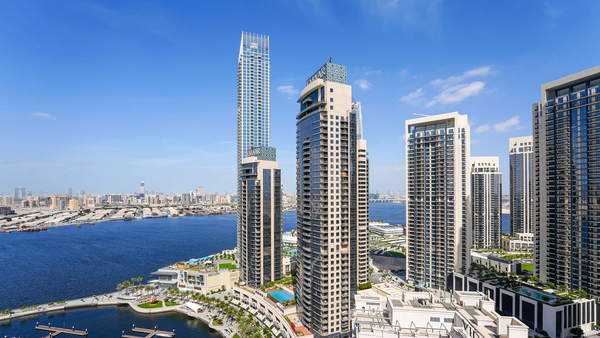
Dubai’s physical property market rebounded sharply in mid-March, contrasting directly with a deeper sell-off in regional real estate stocks. This divergence points to sustained transaction activity on the ground even as financial markets price in extended uncertainty. Our analysis indicates a clear bifurcation for capital allocators.
We observe that while equity investors are cautious, direct property buyers remain active. This is a critical distinction for high-net-worth individuals seeking tangible asset exposure.
The Macro Thesis: Capital Influx and Regional Stability
The UAE continues to function as a geopolitical hedge for global capital. The USD-pegged AED offers currency stability. Tax-free yields and capital preservation remain primary drivers for our target investors.
Dubai’s infrastructure investment, coupled with its Golden Visa program, actively attracts global talent and wealth. This creates intrinsic demand for high-quality residential and commercial assets. Abu Dhabi is reinforcing its position with record-breaking project launches.
Core Metrics: High Transaction Volume Continues
The Dubai Land Department reported AED 16.56 billion ($4.5 billion) in transactions last week. On a single day, Monday, March 17, 2026, the market registered AED 3.8 billion across 1,194 deals, with sales accounting for AED 2.93 billion.
Key areas for sales included Al Yalyis 5, Palm Jebel Ali, and Dubai Land Residence Complex. These figures demonstrate robust capital deployment into physical assets. We note a significant sale of an AED 92.5 million residence at Armani Beach Residences on Palm Jumeirah, underscoring demand for ultra-high-value properties.
The Bull Case: Sustained Demand and Asset Quality
Dubai’s market strength is driven by cash-rich buyers and limited distressed sales. Owners are holding firm, resisting significant discounts below pre-conflict price levels. This indicates underlying confidence and strong liquidity rather than speculative frenzy.
Off-plan and villa segments lead demand. Projects by credible developers in strategic locations, featuring flexible payment plans, are attracting the most capital. Timely delivery is now a critical factor for resale value and long-term investor trust.
In Abu Dhabi, rising rents are converting renters into buyers. March transactions reportedly increased 40-50% over February. Ohana Development’s Manchester City Yas Residences saw AED 6 billion in sales in 72 hours. Modon’s Tara Park on Al Reem Island, offering freehold homes, also reflects strong investor interest in quality residential developments.
Azizi Zain in Al Furjan, a metro-linked project, is 55% complete. Its positioning near key Dubai hubs makes it attractive for tenant retention. Such projects offer predictable rental demand due to accessibility and community infrastructure.
The Bear Case: Selective Over-Leverage and Long-Term Holding Periods
If your investment strategy prioritizes immediate rental yield, certain off-plan projects require caution. For example, the Ti Villa project in Sharjah, with a Q1 2028 handover, implies a three-year waiting period for rental income. While the 30/70 payment plan is phased, capital remains illiquid until completion.
The current equity market sell-off highlights broader regional sensitivities. While the physical market shows resilience, prolonged geopolitical issues could impact investor sentiment or capital flows. Over-reliance on developer incentives, such as DAMAC's 'Buy a Home, Get a Luxury Car' campaign, can sometimes signal competitive pressure to move inventory, rather than pure demand.
Additionally, while off-plan demand is robust, the surge in new launches necessitates a rigorous assessment of supply absorption rates in specific micro-markets. Not all projects will perform equally post-handover.
North Capital Verdict: Strategic Allocation for High-Net-Worth Investors
We maintain a bullish stance on Dubai and Abu Dhabi real estate for targeted investments. The market demonstrates consistent demand, driven by genuine end-users and long-term capital preservation objectives. Our focus remains on projects with proven developers, strategic locations, and clear value propositions.
The current environment offers opportunities for those seeking capital appreciation and stable yields, particularly in well-connected communities and waterfront developments. We advise scrutinizing pre-handover liquidity risks and favoring assets with inherent scarcity or infrastructure advantages.
To run exact ROI projections for your specific budget parameters, or to review floorplans and payment structures before public launches, request a strategy session below. We are currently analyzing several off-market opportunities that align with our investment criteria.
Frequently Asked Questions
What are the latest Dubai property transaction volumes?
Dubai's real estate sector recorded AED 16.56 billion ($4.5 billion) in transactions last week. A single Monday saw AED 3.8 billion across 1,194 deals, with AED 2.93 billion in sales.
Are distressed property deals available in Dubai's current market?
While buyers are searching for distressed deals, most owners are holding firm. Limited discounts primarily reflect personal financial pressure or early investor profit-taking, not a broad downturn.
What is driving residential property demand in Abu Dhabi?
Rising rents are motivating more Abu Dhabi residents to purchase homes. Projects like Manchester City Yas Residences and Modon's Tara Park on Al Reem Island are attracting significant international and local buyer interest due to their prime locations and family-oriented amenities.
What are the risks in the UAE real estate market as of 2026?
Regional geopolitical tensions are contributing to an equity market sell-off, which could impact sentiment. While physical transactions are strong, an influx of new supply, particularly in off-plan, requires careful evaluation of developer credibility and project specifics.